 Skip to content


Can Alcohol Consumption Damage Muscle Growth & Fitness Levels?
Madhura MohanIf I give a simple and straight answer as 'yes' to the above question, you won't agree to it. The problem with we grown-up adults is — though we all know drinking alcohol is a bad habit and is harmful to health — we tend to be kids sometimes, trying to get the favourable answer by asking the question in a different fashion. It's like if you tell a child that eating chocolates can harm its teeth, the child says what if it can just have one? And then you know how many 'one' means for the child…
Well, guys, you need to set hard goals for yourself when it comes to fitness — trying to be smart for making the wrong decision is called foolishness! When you already know alcohol is bad for health, the same bad would be the answer if alcohol is linked to muscle building…
This article aims to streamline the negative impact of alcohol on muscle and fitness… read the entire article to know how?
1. Alcohol Obstructs Digestion

- Consumption of alcohol can affect the way your body absorbs and utilizes nutrients from your diet. When you consume alcohol, it gets processed in the liver and broken down into acetate. Acetate is toxic, and hence your body prioritizes the metabolization of alcohol above everything else — due to which, the digestion of carbohydrates, protein, fats, and other micronutrients will be kept aside until all alcohol has been cleared from your body.
- Alcohol irritates your gastrointestinal system by making your stomach produce more acid than usual, which results in gastritis and indigestion.
- Even moderate consumption of alcohol causes decreased protein absorption.
- Alcohol isn't digested like other foods. While absorption of most nutrients takes place in your small intestine, this is not the case with alcohol. Once alcohol is swallowed, it goes down the esophagus into the stomach and the small intestine — it avoids the normal digestion process and goes right into the bloodstream. Alcohol reduces the amount of digestive enzymes the pancreas produce for digestion of nutrients.
- Since alcohol metabolism inhibits nutrient absorption, whatever you eat doesn't necessarily make it to the muscle tissues and organs that need to recover.
2. Alcohol Hinders Your Weight Loss Goals

- Research indicates that when it comes to muscle building and fitness, an effective nutrition plan makes up approximately 75% of the equation while the remaining 25% constitutes exercise.
- Low calories are all that matter for weight loss, but going out drinking alcohol can lead to the ultimate empty-calorie fest. Please note the bold letters — empty-calorie — yes, alcohol has absolutely no nutritional value and hence does not benefit our body in any way.
- Alcohol is often associated with rapid weight gain, but people don't know how this happens. Alcohol has nearly 8 calories per ml, which is twice as much as protein and carbs (which contribute 4 calories per gram) and equivalent to that of fat (9 calories per gram).
- Your body cannot convert calories from alcohol into glycogen, a form of stored carbs — alcohol inhibits fatty acid oxidation.
- Whether you are a regular gym-goer, recreational gym-goer, or casual exerciser, there needs to be an awareness that alcohol can rack up on your total calorie count and harm your weight loss goals.
3. Alcohol Disrupts Muscle Recovery

- As per studies, alcohol consumption interferes with muscle recovery and regeneration after training. During the recovery period following a workout, muscle protein synthesis is significantly elevated, which makes the right nutrition crucial for muscle growth.
- Alcohol impedes the digestion by not allowing efficient absorption of nutrients. By hindering the protein synthesis process, alcohol causes your body to enter a catabolic state, wherein the body is breaking down protein rather than building it.
- Alcohol can affect hormones necessary for promoting protein synthesis. It has a terrible impact on testosterone levels — the hormone that plays a vital role in increasing muscle protein synthesis when coupled with exercise. Alcohol intake brings down testosterone levels that directly affect muscle building; it increases the hormone cortisol, the elevated levels of which are known to decrease the amount of growth hormone.
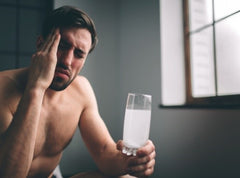 Alcohol can disrupt sleep, which may lead to fatigue the next day and may impair recovery in a more direct manner.
- A strong immune system plays a key role in protecting the body against infection and healing the body after injury. Our immune system is integrated with our neurological and endocrine systems, all of which must be in balance during training and recovery to optimize muscle growth. Alcohol consumption produces a lot of free radicals which lead to immune deficiency due to oxidative stress.
 More than anything, alcohol leaves you dehydrated, which reduces the uptake of nutrients and hence reduces rates of recovery and muscle growth. You need to be hydrated when you exercise to maintain the flow of blood through your body, which is essential for circulating oxygen and nutrients to your muscles. Alcohol is a diuretic and can cause dehydration by causing increased fluid loss.
- When dehydrated, people are at risk of sustaining musculoskeletal injuries like muscle cramps and muscle pulls. Dehydration has negative effects on the body — from inducing feelings of fatigue to causing low physical performance. Dehydration can induce hunger and disrupt muscle cells' ability to produce ATP.
Don't let bad habits sabotage your fitness goals…
Despite its known health risks, less alcohol consumption does not necessarily translate to muscle health and fitness…
Reference:
https://www.ncbi.nlm.nih.gov/pmc/articles/PMC2493591/
https://www.ncbi.nlm.nih.gov/pubmed/11115785
https://www.ncbi.nlm.nih.gov/pubmed/20012446
https://www.researchgate.net/publication/260213667_
https://www.ncbi.nlm.nih.gov/pmc/articles/PMC4629692/
Also Read: How To Store Apple Cider Vinegar
Follow our Instagram page for the latest updates: badalkhudko
1 comment
I have gone through entire article. Its really helpful. Dreaming is very easy, but running behind dreams to achieve is difficult task. Where in between this cross tracks like smoking, drinking, process foods easily attracts today generation. Small article like this to educated beginners are much greater idea.
Thanks to ASITIS